




.jpg.jpg)








.webp)


The last unmeasured space: Seven trends put the car park on the real estate industry's agenda in 2026
.jpg)
The outdoor space becomes a planning task: Parking pressure is shifting to private land, free flow is catching up with Northern Europe, AI is held back by the data. Seven trends after the Expo Real.
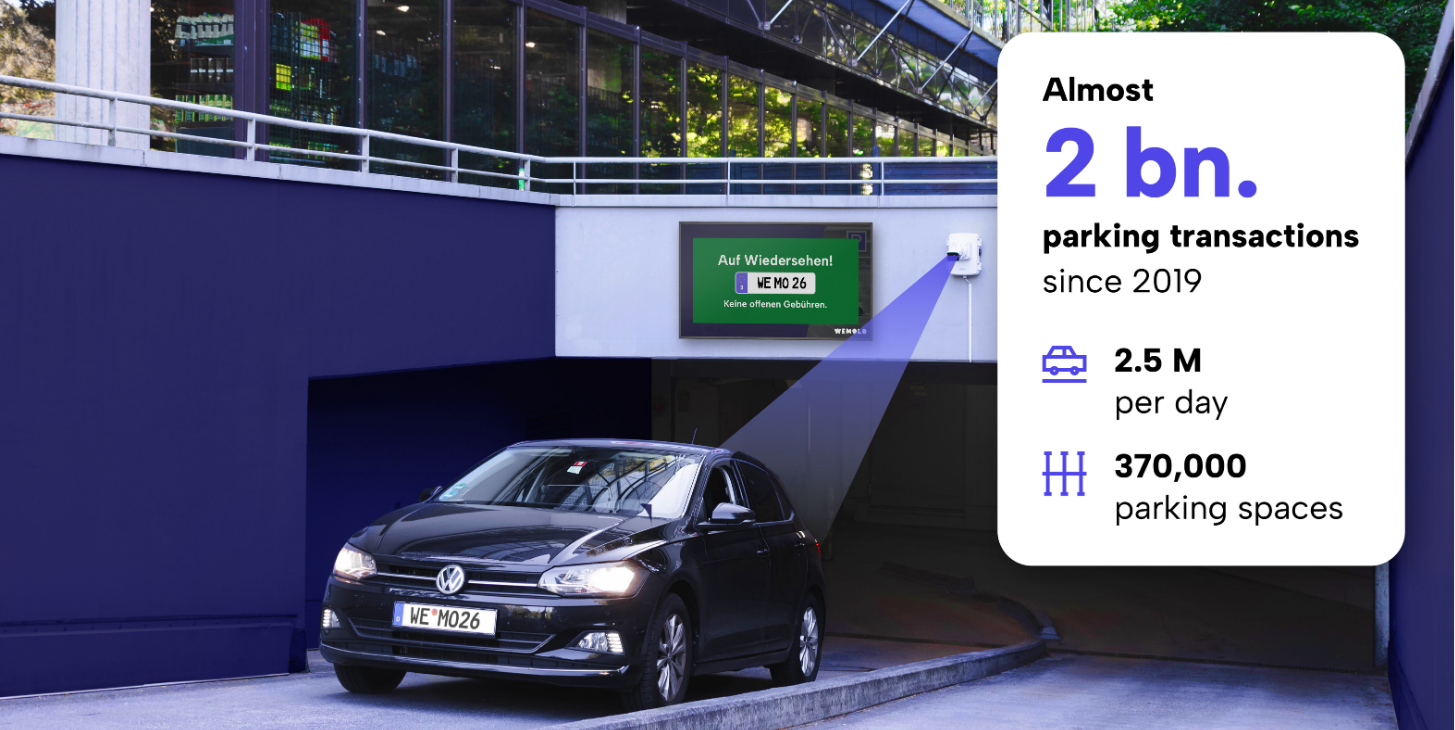
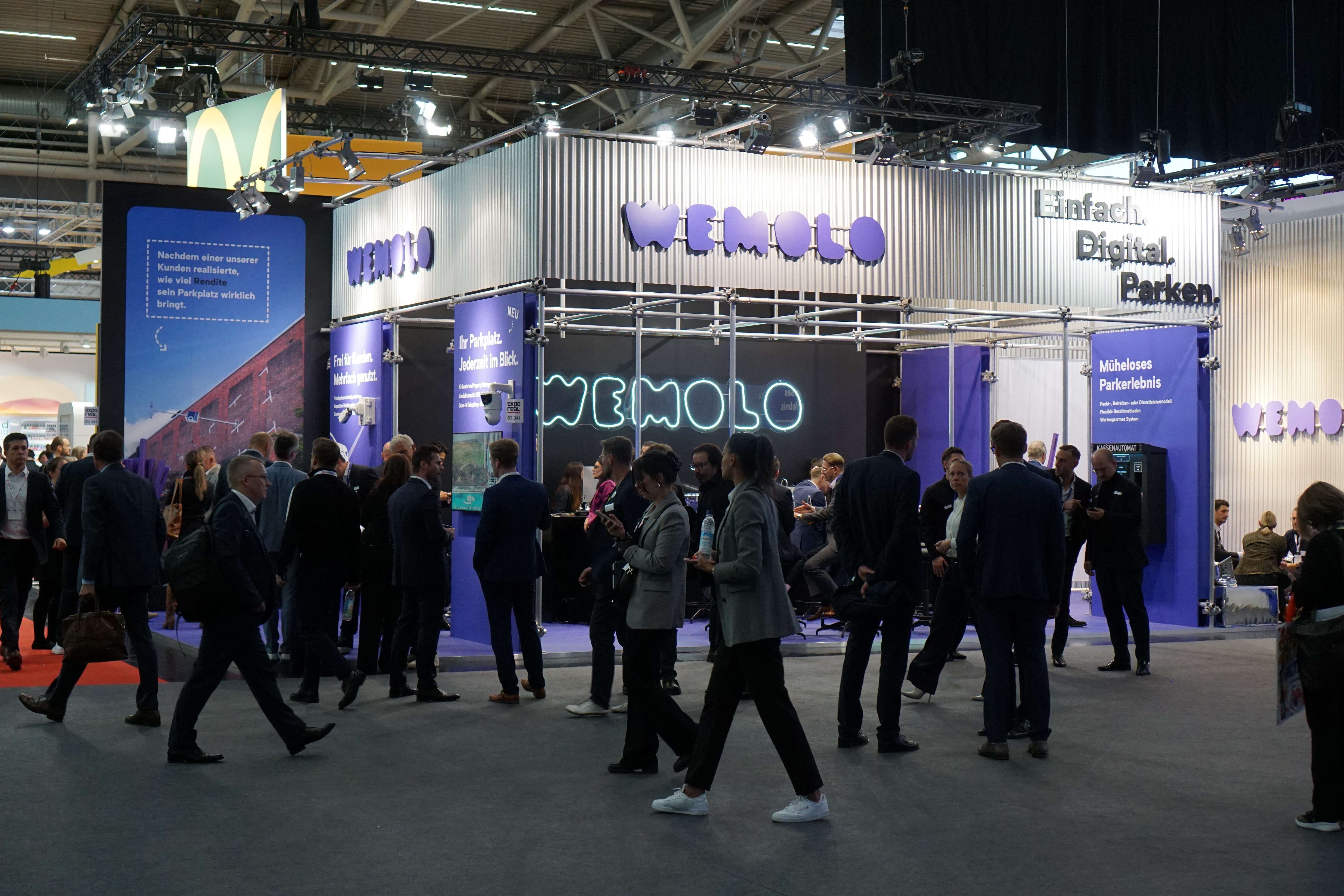
Munich, 14 October 2026. Charging points, solar roofs, trees, residents' parking: the car park is taking on more and more tasks, while the obligation to build it is falling away. Several German states have scrapped their parking space requirements or left them to the municipalities, and Hamburg has replaced them with a mobility certificate. From 1 January 2027, a single charging point will no longer be enough for existing buildings; one will be required for every ten parking spaces. “The space isn't getting more square metres, just more tasks,” says Jakob Bodenmüller, CEO and co-founder of Wemolo (www.wemolo.com). “Anyone who wants to allocate it a second time first needs to know when it is free.” Europe's leading provider of barrier-free parking management operates more than 4,500 car parks across Europe with around 370,000 parking spaces and records 2.5 million parking events every day. After three days of Expo Real, the Munich-based technology company assesses seven developments that are turning parking space into a planning and management task for the real estate industry.
1. More cars, less kerbside: Parking pressure is shifting to off-street spaces
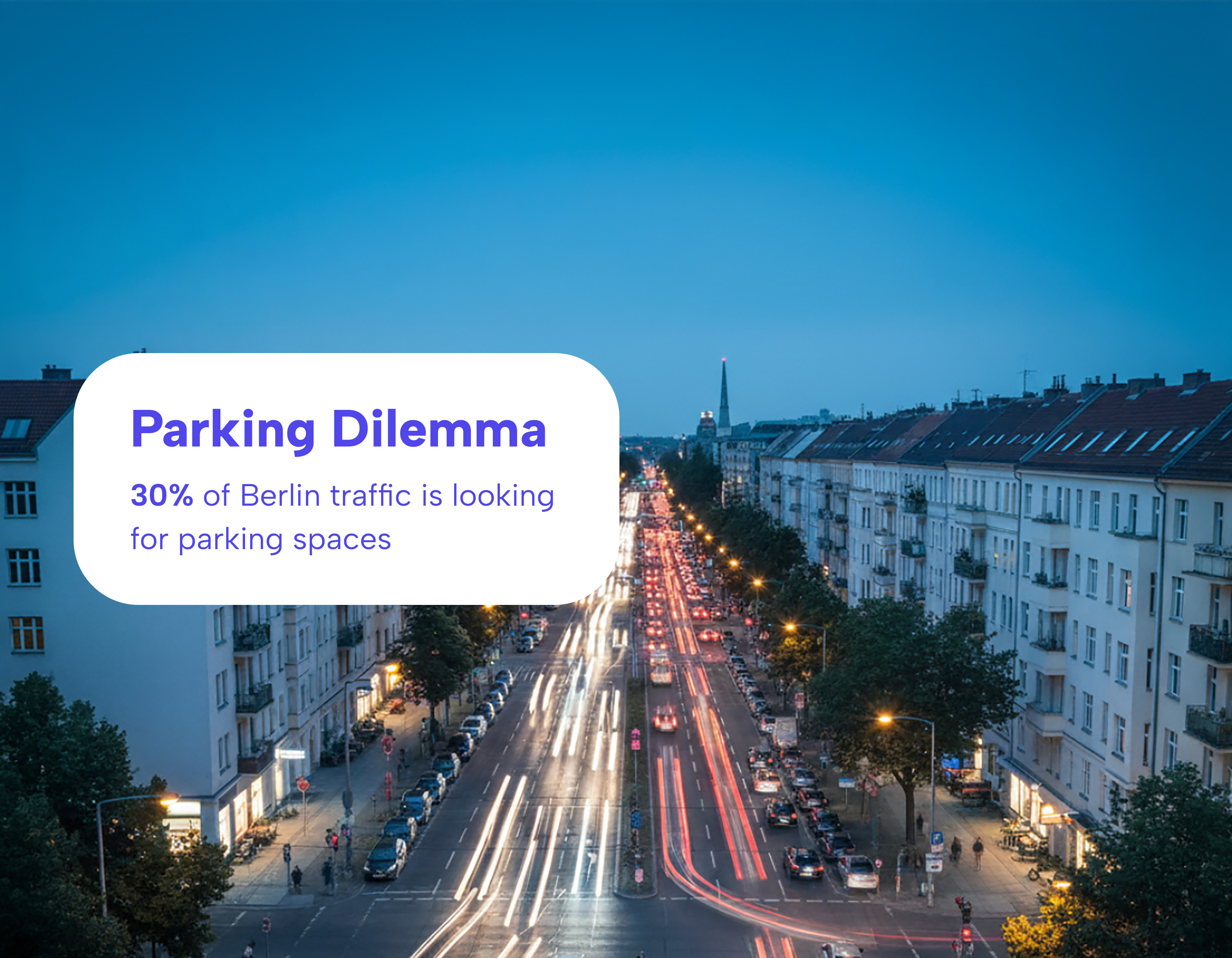
Germany has more cars than ever. As of 1 January 2026, 49.5 million were registered, an increase of just over 20 per cent since 2008 (Kraftfahrt-Bundesamt, 2026). At the same time, the kerbside in cities is competing with cycle lanes, delivery zones, tree sites and public spaces.
How the population is dealing with this is shown by a representative survey by IFH Köln: 93 per cent name good accessibility as a basic requirement for visiting the city centre. At the same time, 87 per cent of regular car users accept fewer on-street parking spaces if functioning alternatives exist, and 73 per cent support relocating parking to compact parking structures (IFH Köln, Lödige Industries and BABLE, 2026).
Parking pressure is therefore not disappearing; it is shifting. Anyone who wants fewer vehicles at the kerbside needs the existing spaces behind it: the car parks of retail, offices and commercial businesses. For retailers and owners, this means that it is not the amount of space that determines a location's success, but how it is organised. The car park must be available at peak times and can be put to work during the remaining hours.
2. Free flow is catching up with Northern Europe
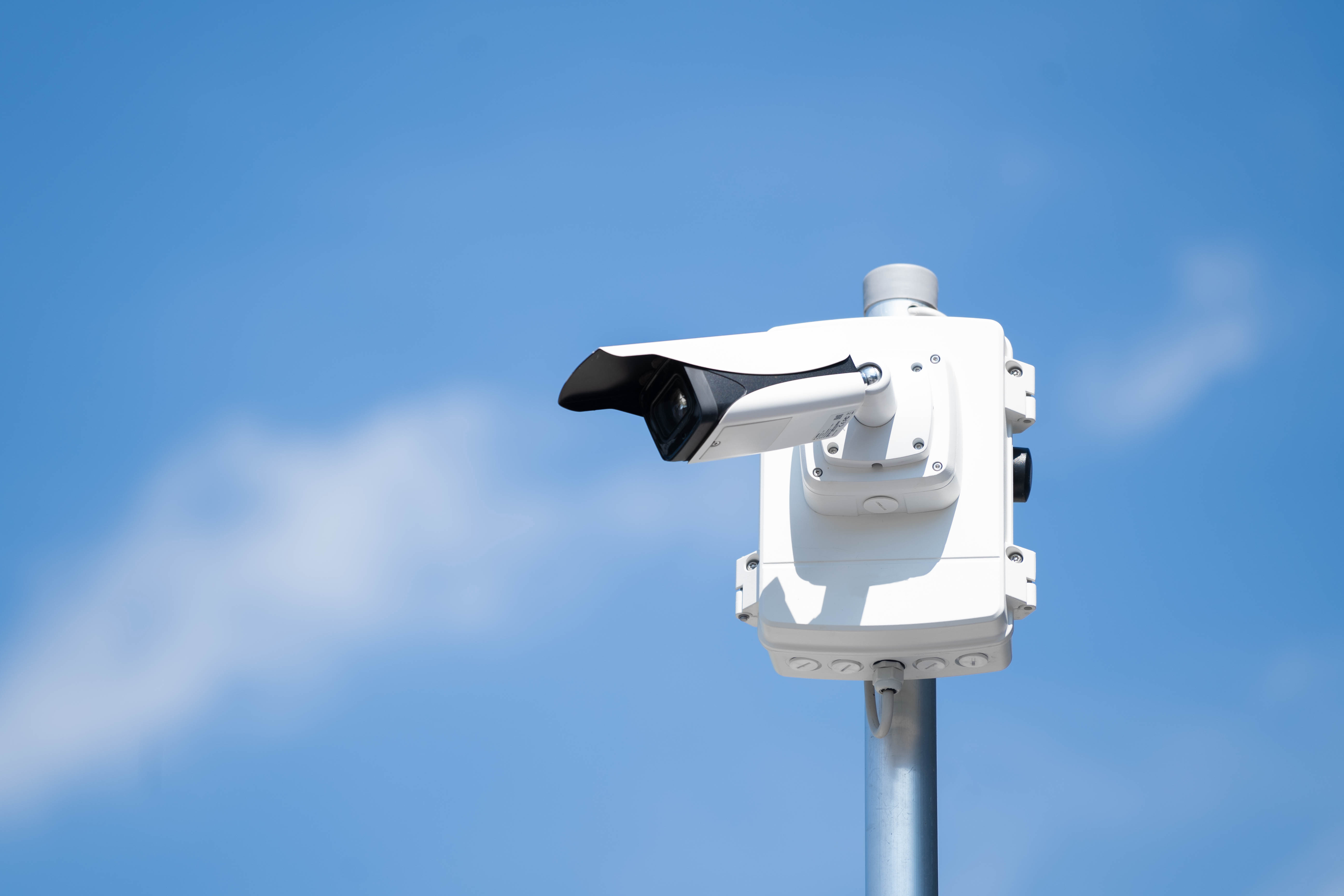
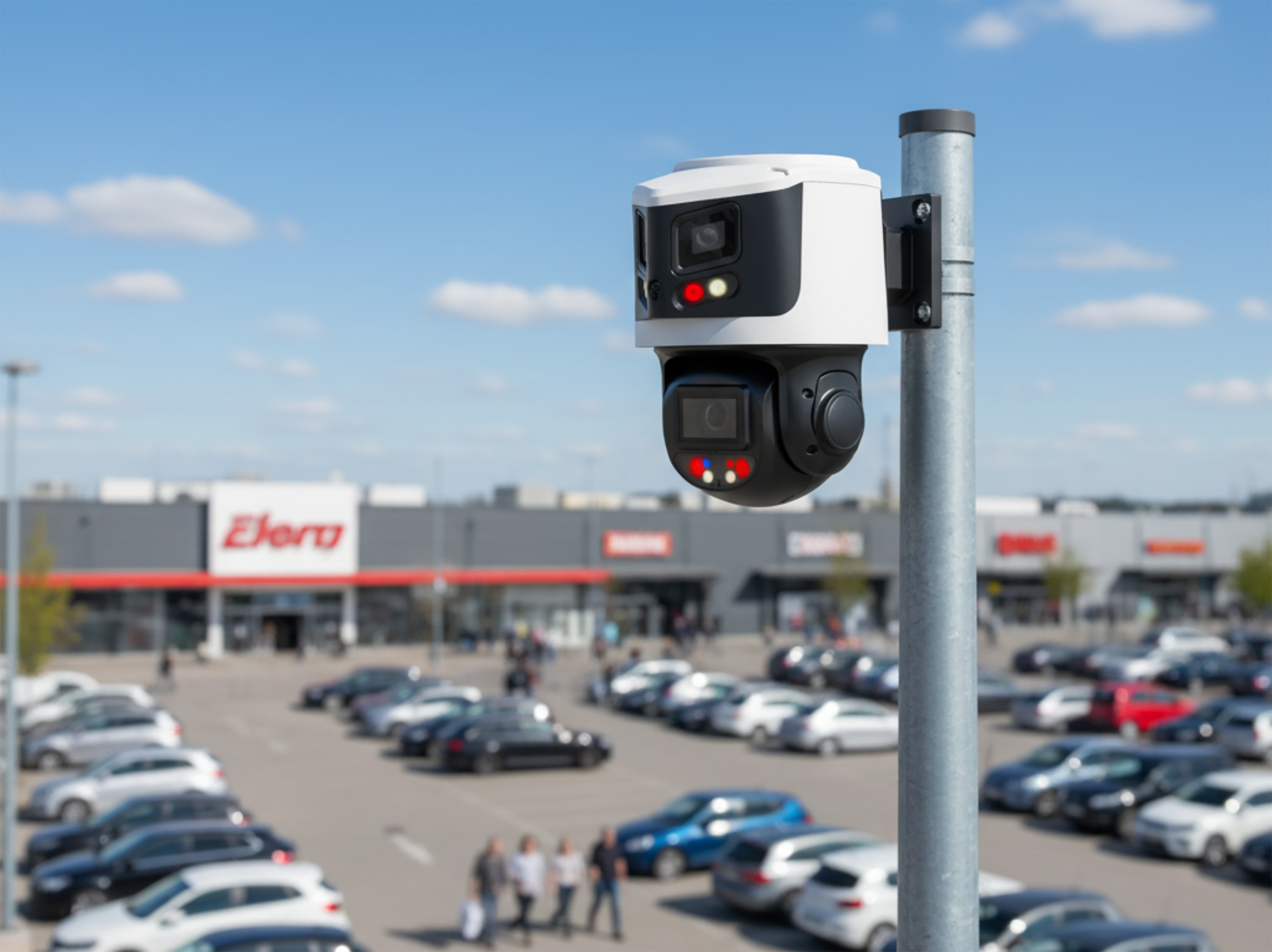
Anyone parking in Norway will usually no longer find a barrier. Three out of four drivers there encounter barrier-free car parks; in Germany, it is one in three. This was the result of a 2024 survey of 5,750 drivers in seven European countries; 65 per cent of German respondents wanted the barrier-free model (Riverty, 2024). Since that survey, more and more sites in the German-speaking market have followed suit, on both sides of the market: multi-storey car parks are swapping barriers and tickets for licence plate recognition, retail sites are swapping the parking disc. Together with Wemolo, EDEKA now monitors more than 250 sites with 27,000 parking spaces using cameras.
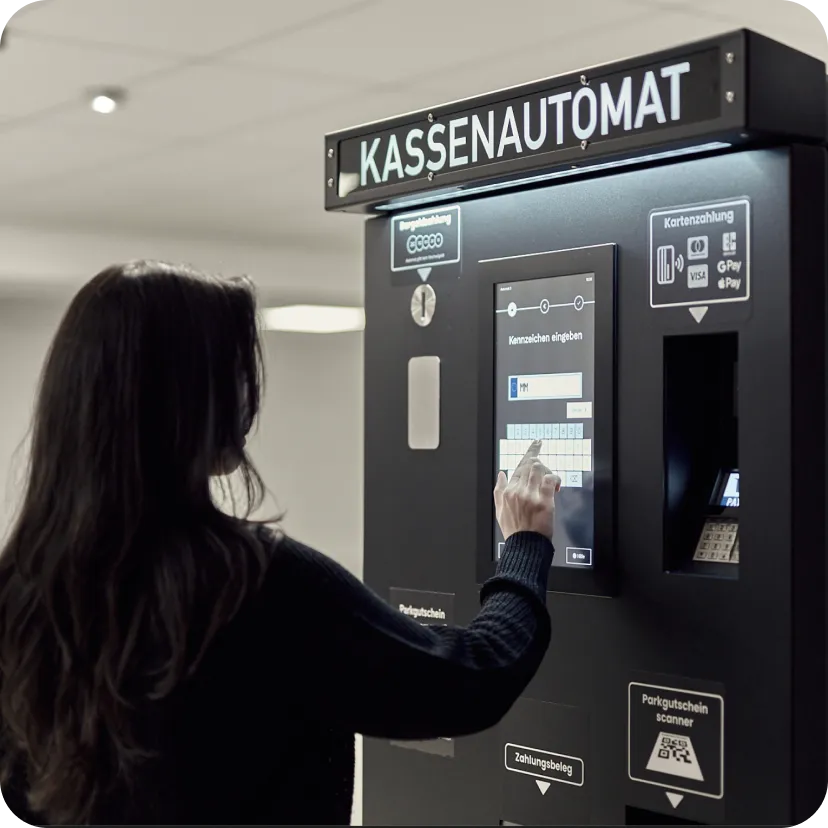
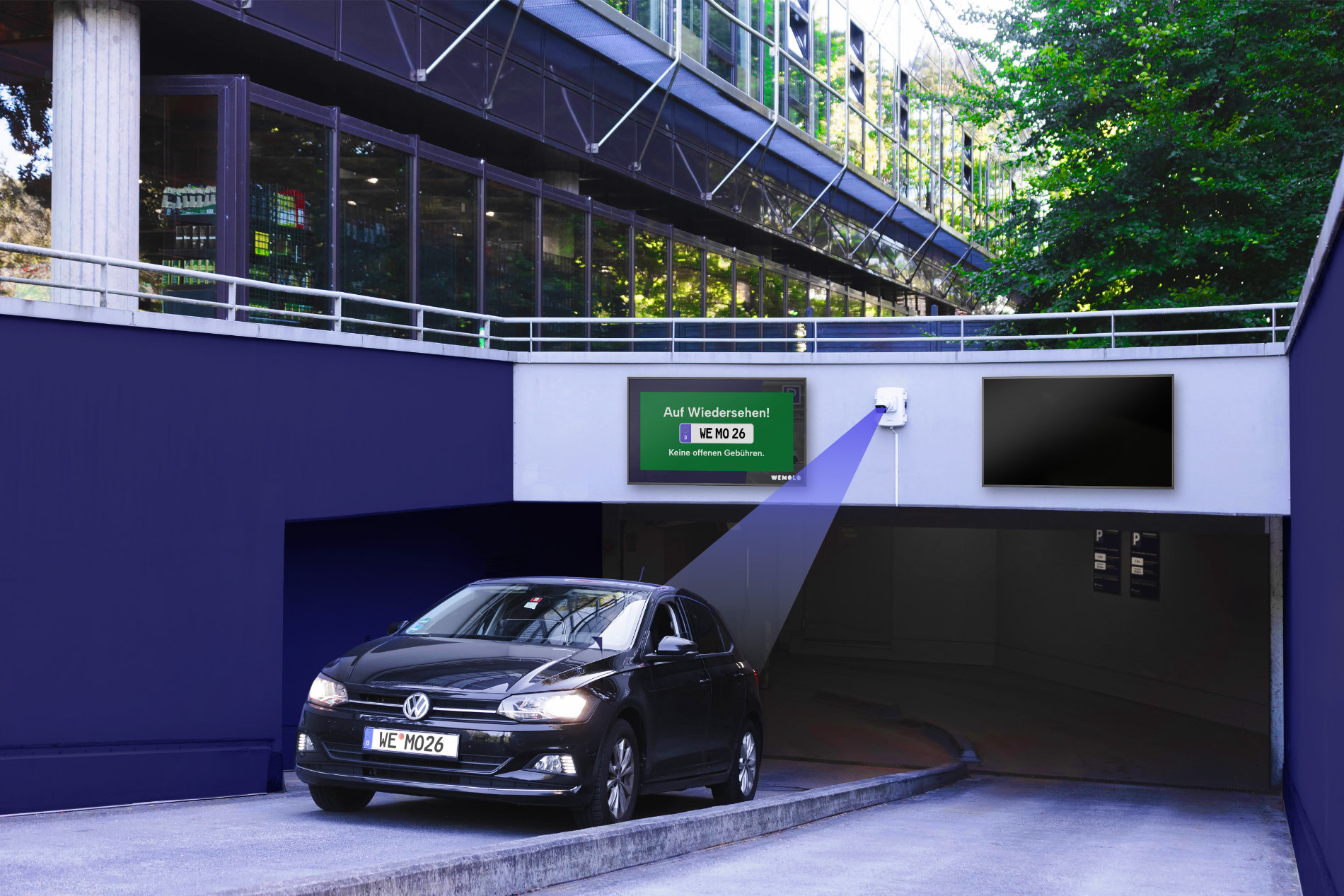
The difference from the ticketless parking of previous years: it is not just the ticket that disappears, but access control itself. Barriers, pay machines and their maintenance go with it, and for the first time the entrance provides reliable data on how the space is used. Multiple use, monitoring and charging management all depend on precisely this data capture.
3. Multiple use moves from pilot to business model
What was tested at individual retail sites in 2025 is being rolled out across regions and branch networks in 2026.
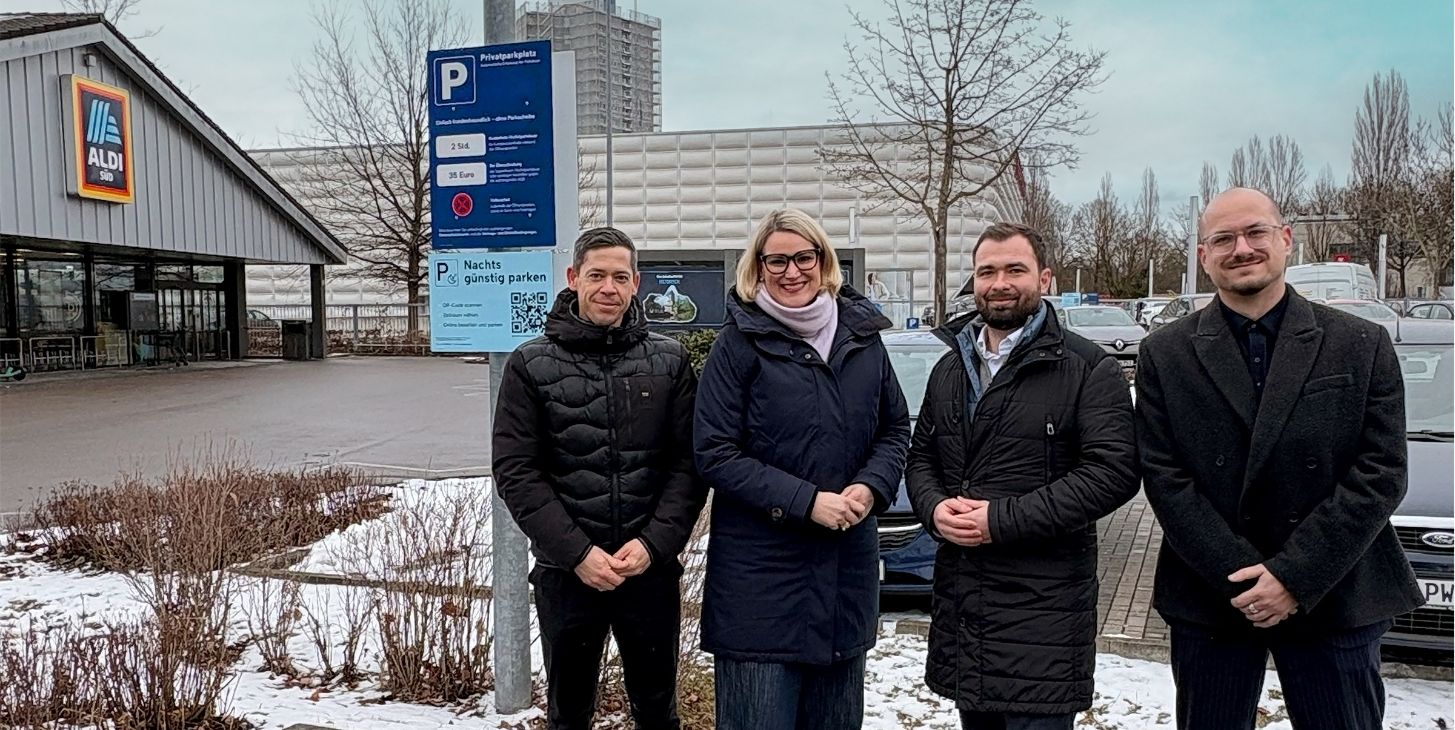
ALDI SÜD has followed suit since November 2025, from Krefeld and Duisburg to Nuremberg and Augsburg, all the way to Munich and the Allgäu: At more than 20 sites, parking spaces can be booked via Wemolo for five euros per night or 50 euros per month. Netto Marken-Discount rents out free parking spaces outside opening hours at around 150 branches. Policymakers are now also backing the model. For cities, it means parking space on private land that they do not have to build, finance or approve. Hamburg's transport authority extended its pilot project to selected REWE and PENNY stores in July, Potsdam is examining opening up supermarket car parks, and a motion has been tabled in Munich's city council. And retail is no longer alone: at Business Campus Garching, two office multi-storey car parks with around 2,000 parking spaces open in the evenings and at weekends for visitors to the Allianz Arena.
The development goes beyond residents' parking. Spaces that were previously free of charge or reserved for a single user group are giving rise to time-based models: customers park for free while shopping, longer stays are charged, and free time slots go to residents, commuters or event visitors. This allows owners to generate income from a space they maintain anyway, without sealing a single new square metre.
“A retailer doesn't simply open its car park to everyone,” says Dominic Winkler, Head of Sales and Business Development Real Estate at Wemolo. “At peak times, it remains reserved for customers. Only the hours in which the data shows it is empty are allocated. Without this proof, no retailer would take part.”
4. Operating data no longer stops at the façade
For 2026, CBRE sees the key in choosing the right operational partner (CBRE Market Outlook, 2026). As a result, spaces that previously ran alongside are moving into active management. For retail, specialist retail and office properties, the car park comes first. The cameras at the entrances were originally installed to keep out unauthorised parkers. In recent years, this technology has become a data source: occupancy by hour and day of the week, dwell times, frequency patterns, the share of returning vehicles. Control becomes management, and management becomes letting.
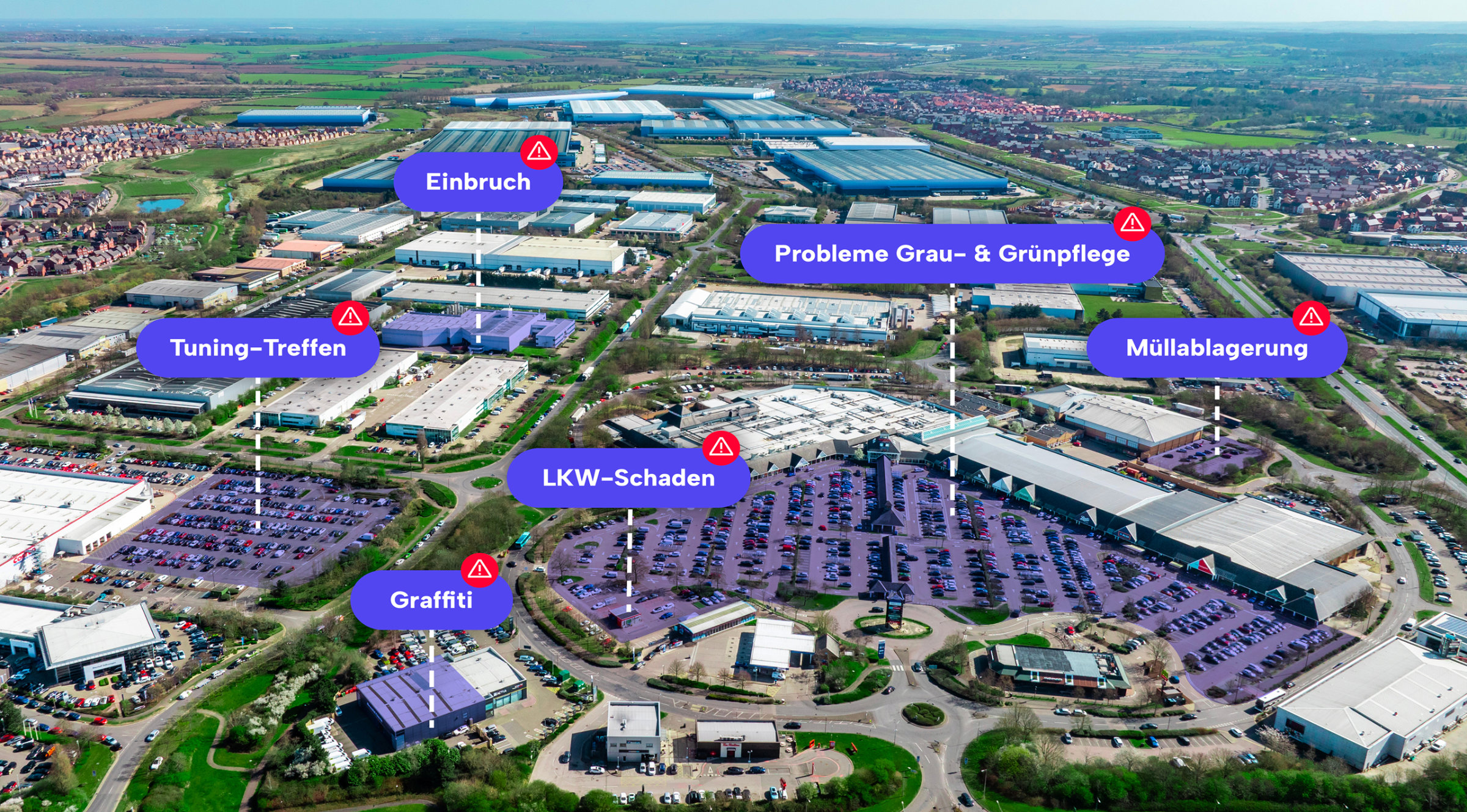
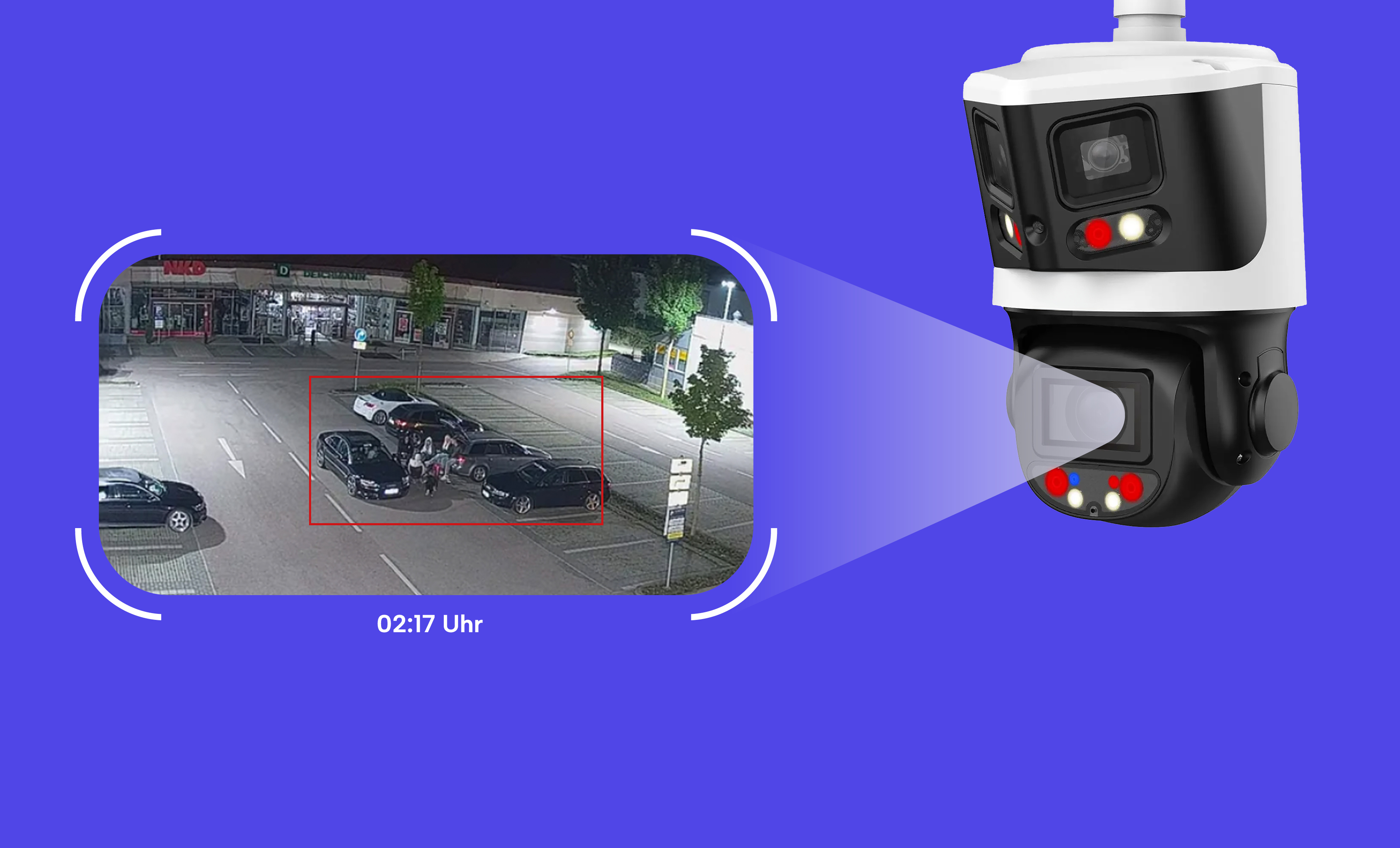
Building on this data, Wemolo, together with portfolio holders and property managers, has developed 360° Area Monitoring: cameras capture the entire outdoor area from the driving lane to the façade and automatically report damage, litter or dumped bulky waste to the responsible service provider, with a timestamp and documented completion.
The leverage comes from distance: anyone who is continuously shown the condition of the outdoor area can manage more properties without being on site more often, and no longer learns about defects only through complaints. Reference customers include Deutsche Investment Retail, the Saller Group and Feneberg.
5. The AI question becomes a data question
The industry's digitalisation study shows how far apart ambition and operations are: 96 per cent of the real estate companies surveyed consider artificial intelligence to be business-relevant over the next five years, 62 per cent name their own data quality as a brake, and only 14 per cent use forecasting and early warning systems extensively (ZIA/EY, 2026).
There is no lack of intent, but of usable data. And that data usually stops at the façade. For outdoor areas, in many places there is no structured operating data for an algorithm to work with. It is precisely this gap that is closed by the camera technology from the previous trend: licence plate recognition provides the usage, area monitoring the condition.
Who owns this data is governed by the EU Data Act: providers of connected products must give users access to the raw data, in machine-readable form and via open interfaces. A space's occupancy, dwell time and frequency therefore belong in the owner's systems and not in a closed manufacturer account.
“With AI in property operations, the bottleneck is not the model but the data basis,” says Bodenmüller. “In many places, outdoor areas are still a blind spot. Only those who capture occupancy and condition there have something a model can work with.”
6. From parking ratios to mobility certificates
No federal state still sets a blanket minimum for how many parking spaces a property needs. In January, Hamburg replaced the obligation to provide car parking spaces with a mobility certificate: since then, location, public transport connections, local traffic conditions and the needs of the respective users have been assessed individually for each plot, and compensation payments no longer apply. In Bavaria, parking spaces only have to be provided if the municipality orders it by statute, and since then such a statute may only fall below the state figure. Berlin and Brandenburg have not had a general car parking obligation for years, and Lower Saxony has scrapped it for residential construction. None of the states has tightened it.
For project developers, this changes the calculation for new builds. For portfolio holders, it changes something else: where the quota no longer prescribes how much parking space must be provided, an existing surplus of parking spaces becomes available for other uses. It can be shared, electrified, built over or used differently. Which of these options works at a site depends on how the space is actually utilised, not on how many spaces are on the building plan.
The parking space is therefore not disappearing from real estate planning. It is losing its automatic status.
7. The car park becomes an energy space: charging, solar and greenery compete for the same square metre
The Bundestag and Bundesrat passed the amendment to the Building Electromobility Infrastructure Act in July. From 1 January 2027, owners of existing non-residential buildings with more than 20 parking spaces must install one charging point per ten parking spaces or equip at least half of the parking spaces with cabling infrastructure. Previously, a single charging point was sufficient. For publicly accessible parking spaces, i.e. the norm in retail, a third option is added: the obligation is also considered fulfilled if the total charging capacity reaches at least 1.1 kilowatts per parking space.
The market is ahead of the law. At the beginning of August, the Federal Network Agency counted around 212,000 publicly accessible charging points in Germany, and the number of battery-electric cars rose by 23 per cent within a year to over two million (Bundesnetzagentur, KBA, 2026).
The practical hurdle rarely lies in the charging hardware. It lies in the grid connection: anyone planning ten charging points needs a capacity that many local distribution grids cannot readily provide. How much power a site actually draws at the same time can only be derived from how the space is used.
Linked licence plate recognition and billing produce a figure that owners and operators previously had to estimate: how many of the vehicles at a site are actually electric.
“With this figure, it is possible for the first time to justify whether a retail park needs ten or thirty charging points,” says Winkler. “It doesn't take the decision away from the owner. But they are no longer planning the expansion blindly.”
At the same time, the same space is expected to generate electricity and absorb water. Several federal states require newly built car parks above a specified size to install photovoltaics; according to calculations by Fraunhofer ISE, around 59 gigawatts of solar capacity could be installed on German car parks. 48 per cent of respondents already perceive competition between parking space and green space, and 84 per cent want more greenery in city centres (IFH Köln, 2026). A solar carport provides shade, but it does not replace a tree or an infiltration area.
At best, the same space works several times over: it provides parking, charging and electricity generation. Which combination works at a site depends on the question of when the space is needed for what.
Outlook: The space in front of the building loses its special status
Seven developments, one common denominator: the space in front of the building is losing its special status. It is planned, measured and billed like any other space in the property.
One question was asked in Munich on more than one panel: whether, in the long term, the best use of a large surface car park is parking at all. Anyone who measures the space can also back up this calculation with evidence instead of estimates.
“At Expo Real, people talked about asset classes, about energy, about AI. The car park came up in all of these conversations, just under a different name,” says Bodenmüller. “Parking space is not an end in itself. One site needs more of it, another less. Anyone who knows how their space is used won't have to guess this decision in 2027.”
About Wemolo
The Munich-based tech company Wemolo is a specialist in digital parking management and optimization. The idea originated in July 2019 from a project at UnternehmerTUM. The team led by the three founders Jakob Bodenmüller, Bastian Pieper, and Yukio Iwamoto now employs over 250 people in Munich and at four other European locations: Salzburg, Zurich, Wroclaw, and Milan. In the DACH region, as well as in Poland and Italy, around 4,500 parking areas already rely on Wemolo’s solution, which records more than 2.5 million parking events daily. In the Deloitte Fast 50 ranking, Wemolo is listed as the fastest-growing startup in Germany. The customer portfolio includes well-known retailers such as Aldi, Edeka, and Carrefour, leading real estate companies such as Defama Deutsche Fachmarkt AG and HIH Real Estate, catering businesses like McDonald’s and Burger King, hotel chains like Best Western, renowned healthcare facilities such as the Asklepios Klinik, and numerous financial service providers and municipalities throughout Europe. Further information at www.wemolo.com.
Pressekontakt Agentur
SCRIVO Communications
Contact: Tristan Thaller
Lachnerstraße 33
D-80639 Munich
Tel: +49 151 21731447
Email: tristan.thaller@scrivo.de
Webseite: www.scrivo.de
Pressekontakt Unternehmen
Wemolo GmbH
Contact: Moritz Meister
Isarwinkel 4
D-81379 Munich
Tel: +49 162 6961751
Email: presse@wemolo.com
Webseite: www.wemolo.com

.jpg)
.jpg)

Your parking expert

From experience, we can say that a brief assessment of your situation effectively clarifies the most important issues and paves the way to successful cooperation.
Il tuo esperto di parcheggi

Per experience, possiamo dire che una breve evaluation of vostra situazione chiarisce efficacemente le questioni più importanti e apre la strada a una cooperazione di successo.
location